

If your last few utility bills left you doing a double take, your roof might be the hidden culprit long before you ever see a water stain on the ceiling. A failing roof rarely announces itself with a dramatic leak right away; instead, it quietly lets conditioned air escape and outside heat pour in for months or even years. Understanding the early warning signs can save you hundreds of dollars and help you catch a problem while it is still a simple fix. This article breaks down exactly how roofing issues connect to your energy costs, and what you can do about it before things get worse.
Declining Attic Insulation and Heat Transfer
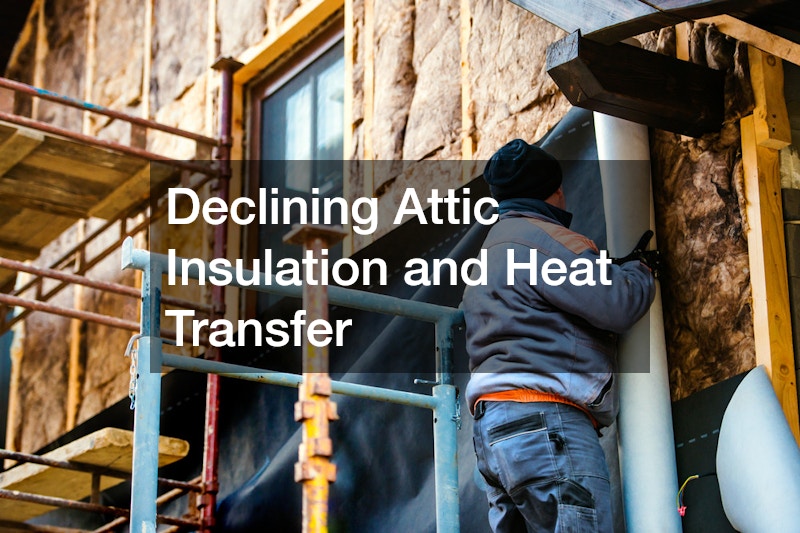
Insulation is one of the biggest factors in whether your home holds onto conditioned air or lets it slip away through the roofline. Most attic insulation is rated to perform for 15 to 20 years, but its real-world effectiveness often declines much sooner due to everyday wear. Over time, insulation compresses under its own weight, shifts out of place from attic foot traffic or pest activity, or gets damaged by moisture from small roof leaks and poor ventilation, all of which reduce its effectiveness even if your roof looks fine from the outside. Even a few inches of compressed or waterlogged insulation can cut its R-value significantly, meaning heat moves through the attic far more easily than it should. In winter, that translates to warm air escaping upward and out; in summer, it means attic heat radiates down into living spaces. Homeowners sometimes notice uneven room temperatures or ceilings that feel warm to the touch before they ever notice a rise in their utility bill. When insulation underperforms, your HVAC system has to work overtime to maintain a comfortable temperature, cycling on more frequently and running longer with each cycle. That extra effort shows up directly on your monthly bill, sometimes adding 10 to 20 percent or more to heating and cooling costs depending on the severity of the insulation loss. If you notice your system running constantly without much change in comfort, it may be worth scheduling an HVAC service to rule out equipment strain before assuming the roof or attic is solely to blame.
Roofs deteriorate slowly, but attic insulation degrades in ways that are even harder to notice from inside the house. Fiberglass batts compress over time, blown-in cellulose settles and creates thin spots, and moisture from small roof leaks or poor ventilation can mat insulation down until it loses most of its R-value. A material rated for R-38 when installed can perform closer to R-20 after a decade of settling and humidity exposure, and homeowners rarely have a way to notice this from the rooms below. Many homeowners do not realize how much insulation degrades until they get a professional evaluation. Reaching out to attic insulation companies for an inspection can reveal gaps, thinning, or moisture damage that are invisible from inside the living space. These inspections often use infrared cameras or simple depth checks to spot areas where insulation has shifted away from wall lines or been crushed under foot traffic near attic access points. Even minor gaps matter more than they seem. A one-inch gap running along a single joist bay can undercut the insulation’s effectiveness across an entire section of ceiling, forcing your HVAC system to work harder to maintain temperature. Pests, old renovations, and improperly sealed light fixtures are common culprits behind these hidden voids. Catching this early often costs far less than waiting until your energy bills force the issue. A targeted insulation top-up or repair typically runs a few hundred dollars, while months of inflated heating and cooling costs can quietly add up to several times that amount before anyone notices the real cause.
- Insulation should maintain a consistent, even depth across the entire attic floor — most homes need 12-15 inches of blown-in fiberglass or cellulose (R-38 to R-49) for adequate performance
- Low spots, gaps around vents, or compressed areas create thermal bridges where heat escapes far faster than through properly insulated sections
- Water stains or matting in insulation usually indicate a roof problem above, since damp insulation loses much of its R-value and stops resisting heat flow effectively
- Older homes often have outdated insulation types, like thin batts or loose vermiculite, that perform poorly by modern standards and may only offer R-11 to R-19
- Pre-1990s construction rarely accounted for today’s energy codes, so even “intact” insulation may be undersized for current climate demands
- A professional assessment can quantify exactly how much heat loss is occurring, often using infrared thermography to pinpoint weak zones invisible to the naked eye
- These assessments typically translate heat loss into dollar estimates, showing homeowners the real monthly cost of underperforming insulation
Aging Shingles and Reduced Reflectivity
Shingles do more than keep water out; their surface reflects a portion of the sun’s energy away from your home. As shingles age, they lose granules and reflectivity, which means more heat gets absorbed into the roof deck and radiated into your attic space. This gradual change is easy to miss because it happens slowly, but its impact on cooling costs can be significant during summer months.
If your shingles are approaching the end of their expected lifespan, a full reroofing project might make more financial sense than repeated patchwork. Newer roofing materials are designed with better thermal performance in mind, which can noticeably reduce the strain on your cooling system. Waiting too long often means paying higher energy costs for years before the roof finally fails outright.
Ventilation Problems That Trap Heat
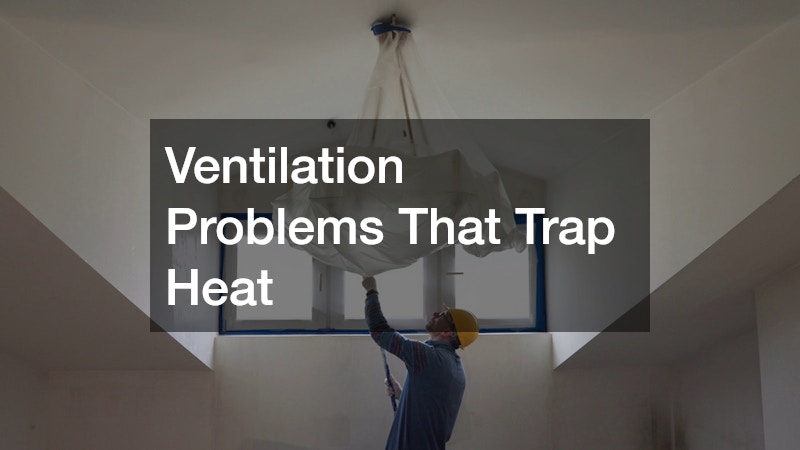
A well-ventilated attic allows hot air to escape rather than building up under the roof deck. In summer, a poorly ventilated attic can reach temperatures of 150 degrees or more, and much of that heat radiates directly into the ceiling and rooms below. When ridge vents, soffit vents, or exhaust fans are blocked or improperly installed, heat becomes trapped and pushes down into the living space below. This trapped heat doesn’t stay confined to the attic. It raises the temperature of your ceilings and upper floors, forcing your cooling system to work against a constant downward heat load rather than simply maintaining a set temperature. Common culprits include insulation stuffed too tightly against soffit vents, bird or rodent nests blocking exhaust points, and roofing repairs that accidentally covered ridge vents with shingles or sealant. Even a single blocked vent can throw off the balance of intake and exhaust airflow the whole system depends on. The result is that air conditioning services get called in more often, and units run longer cycles just to counteract the extra heat load coming from above. Over time, this added strain shortens equipment life and drives up utility costs long before anyone notices a drop of water on the ceiling.
A poorly ventilated attic doesn’t just waste energy — it also shortens the life of the roof above it. In summer, trapped heat can push attic temperatures well above 150°F, which bakes asphalt shingles from underneath and speeds up granule loss and cracking. In winter, warm, moist indoor air that gets trapped in the attic can condense on the underside of the roof deck, leading to mold, wood rot, and even ice dams along the eaves. This creates a frustrating cycle: the roof deteriorates faster, insulation loses effectiveness when it gets damp, and the HVAC system has to work harder to compensate — driving bills up even before any leak appears. The good news is that ventilation problems are often inexpensive to fix compared to the energy losses they cause. Clearing debris, insulation, or paint from soffit vents can restore intake airflow in an afternoon. Adding ridge vents, gable vents, or additional soffit vents can correct an imbalance, since most attics need a roughly even split between intake (low) and exhaust (high) ventilation to work properly — a common rule of thumb is one square foot of ventilation for every 150 square feet of attic floor space. Because ventilation issues are easy to overlook and closely tied to roof health, it’s worth having them checked any time a roof inspection is scheduled. A contractor can quickly spot warning signs like discolored roof decking, matted insulation, or blocked airflow paths that a homeowner might miss from the attic hatch. Catching these problems early often costs far less than replacing shingles or repairing structural damage down the road.
Small Roof Damage That Precedes Visible Leaks
Cracked flashing, curled shingle edges, and small punctures rarely cause immediate leaks, but they do allow air infiltration long before water intrusion becomes obvious. This kind of damage lets conditioned air escape through tiny gaps, which your HVAC system then has to compensate for continuously. Homeowners often overlook these issues because there is no visible sign of water damage yet.
Scheduling roof repair as soon as minor damage is spotted prevents both the energy loss and the eventual leak that would follow. A roofing professional can identify these subtle problem areas during a routine inspection, often catching them before they show up as a spike on your utility bill. Addressing small repairs promptly is almost always cheaper than waiting for a full leak to develop.
Structural Gaps Around Roof Penetrations
Chimneys, skylights, vent pipes, and other roof penetrations are common weak points where seals can deteriorate over time. Even a small gap around one of these features allows outside air to bypass your insulation entirely, undermining the efficiency of your entire attic system. This kind of leakage is especially sneaky because it can exist for years without producing any visible interior damage.
Sealing these gaps properly requires attention to both the roofing material and the flashing details around each penetration. A thorough inspection should always include a close look at these areas, since they are disproportionately responsible for energy loss compared to their small size. Fixing them early is a straightforward way to stop paying for air you never intended to lose.
Foundation and Drainage Work That Protects the Whole Structure
While it might seem unrelated, proper drainage and grading around your home’s foundation plays a role in overall structural health, including how your roof and walls perform over time. Poor drainage can lead to shifting soil, which in turn stresses the structure and can create gaps where air escapes. In some cases, contractors use flowable fill to stabilize soil and correct drainage issues near the foundation, indirectly supporting the integrity of the structure above.
Keeping water moving away from your home protects more than just the basement; it helps preserve the alignment of walls and rooflines that keep your building envelope tight. A home that settles unevenly often develops small gaps and cracks that let conditioned air escape, adding another hidden contributor to rising energy bills. Addressing drainage issues is a proactive step that pays off in multiple ways beyond just roof performance.
Landscaping Choices That Affect Roof and Yard Efficiency
The area immediately surrounding your home can also influence energy efficiency, particularly when overgrown vegetation traps moisture against the roofline or siding. Regular weed control around the foundation and lower roof edges helps prevent moisture retention that can accelerate material degradation over time. While this might seem like a minor detail, consistent yard maintenance supports the longevity of the very systems that keep your energy bills in check.
Trees and shrubs planted too close to the house can also shade vents or drop debris that clogs gutters and drainage paths. Keeping landscaping trimmed back gives your roof room to breathe and makes it easier to spot early signs of damage during a visual inspection. A little consistent yard care goes a long way toward protecting your home’s overall efficiency.
Comfort Upgrades That Change How Efficiently a Home Performs

Home additions like sunrooms introduce new rooflines, seams, and transitions that must be properly integrated with the existing roof structure. If these connections are not sealed and insulated correctly, they can become a significant source of energy loss that mimics the symptoms of a failing roof elsewhere on the house. Homeowners considering this kind of addition should plan carefully with a contractor experienced in tying new construction into an existing roof system.
Comfort inside the home matters just as much as structural performance, and small choices add up over time. For example, keeping bedrooms properly insulated and ventilated protects not just your energy bill but also the lifespan of items inside, including mattresses, which can be damaged by excess humidity trapped in a poorly ventilated space. Thinking about your home holistically, from the roofline down to the furnishings inside, helps you catch inefficiencies before they become expensive problems.
Rising energy bills are rarely random, and more often than not, they are an early warning sign that your roof or the systems connected to it need attention. Rather than waiting for a leak to force your hand, take the time to schedule an inspection, address small repairs, and evaluate your attic insulation while the problem is still manageable. Being proactive now means avoiding a much larger repair bill later, and it keeps your home comfortable and efficient year-round.